



What happens when you replace one of the world’s most recognizable logos with 150 ordinary first names?
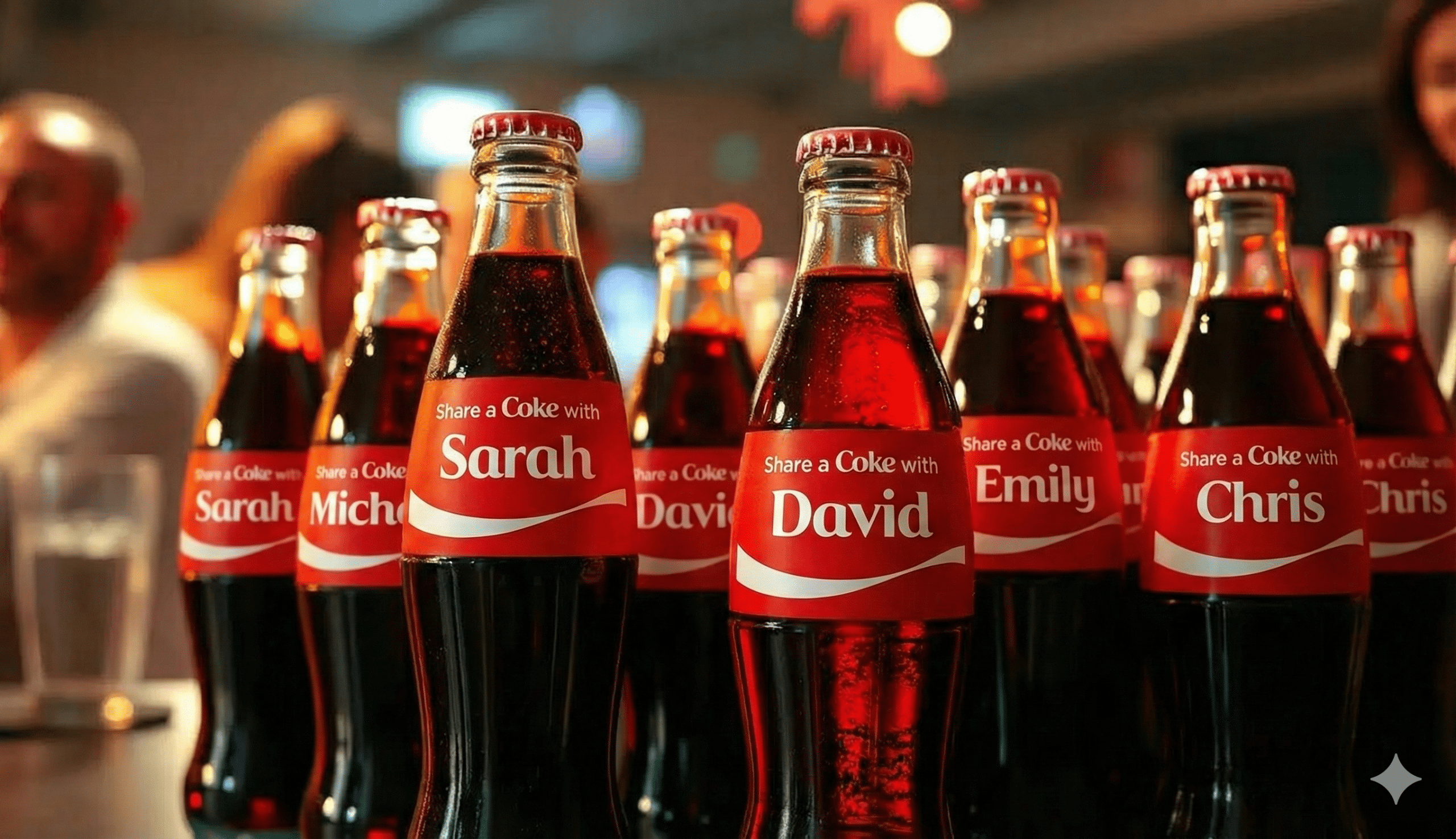
In 2011, Coca-Cola Australia took that bold risk. They launched “Project Connect,” removing their famous branding from bottles and cans. Instead, they printed popular names directly on their products.
The results shocked the beverage industry. A nation of 23 million people purchased over 250 million personalized bottles in just one summer. Lucie Austin, Director of Marketing for Coca-Cola South Pacific, knew they had something special when she saw her own name on a bottle.
This wasn’t just iconic advertising. It became a cultural movement that transformed how brands connect with consumers. The Share a Coke initiative addressed a critical challenge: engaging younger audiences who felt disconnected from traditional marketing.
Today, this strategy has expanded to over 120 countries, including Canada. We see it as one of the most memorable brand campaigns in modern marketing history. It proves that personalization and authentic human connection drive real business results.
Key Takeaways
- TheShare a Coke campaign launched in Australia in 2011, selling over 250 million personalized products in one summer to a population of 23 million people
- The initiative replaced Coca-Cola’s traditional logo with 150 popular first names to create personal connections with consumers
- Led by Lucie Austin and Jeremy Rudge, the campaign successfully addressed the challenge of engaging younger, digitally-native audiences
- The strategy has expanded to over 120 countries globally, with each market adding cultural adaptations for local relevance
- This personalized marketing approach transformed brand activation by creating emotional connections instead of relying on traditional advertising methods
- Canadian marketers can apply lessons from this campaign to create authentic consumer engagement in today’s competitive landscape
The Genesis of a Revolutionary Marketing Strategy
The journey from a creative idea to a global hit needed more than just a clever thought. It required deep cultural insight, technical innovation, and a willingness to take risks. The Share a Coke campaign is a prime example of how strategic thinking and flawless execution can come together. It shows us timeless marketing principles that are just as relevant today.
The story starts with a problem that needed an out-of-the-box solution. Coca-Cola was struggling to connect with the younger generation, who should have been their biggest fans.
The Challenge Facing Coca-Cola in the 2010s
In the early 2010s, Coca-Cola hit a crossroads in mature markets. They found a big gap between the brand and young people. Teens and young adults saw Coca-Cola as iconic but felt it wasn’t talking to them.
In Australia, the situation was even more pressing. The country’s culture values equality and humility. Brands seen as too corporate faced backlash. Coca-Cola needed to become more personal and relatable.
This pattern is seen in coca-cola marketing over time. As brands grow, they risk losing that personal touch. The question was how to keep the brand strong while connecting with people on a personal level.
The best marketing doesn’t shout at people—it invites them into a conversation where they feel seen, heard, and valued.
Birth of the Personalization Concept in Australia
The breakthrough came from a bold approach to creativity. Coca-Cola gave five agencies a 151-word brief with just weeks to respond. They asked for something that would shake things up and reconnect with young Australians.
What happened next surprised everyone. Two agencies came up with the same idea: a wall of Coke cans with popular names in Spencerian typeface. Seeing the same idea from different teams showed they were onto something special.
Ogilvy Australia won the job to bring the campaign to life. But the real creative marketing strategies came during the execution, not just the idea. The team faced legal and technical hurdles that needed creative solutions.
Trademark issues stopped them from using the Spencerian script on names. They created a new font called the “You” font, inspired by the Coca-Cola logo but unique. This wasn’t just a fix—it became a key part of the campaign’s identity.
Technical challenges were also huge. They had to get the Coke red color just right on every label. Any small mistake would ruin the brand’s look across millions of bottles.
Initial Testing and Consumer Response
The campaign started with 150 names. This was a small step, but it made the campaign more special. It made people want to share, not just keep for themselves.
When people found their names, they felt special. Those who didn’t looked for friends and family with their names. This made the campaign a hit because it encouraged sharing.
At traveling kiosks in major malls, people could make their own Coke cans. The response was huge. People waited hours to get their personalized Coke cans.
These kiosks became the place to be during the summer holidays. Parents and friends came together. The experience was as valuable as the Coke itself.
Managing risks was key. They had to block over 5,000 bad words and phrases for digital personalization. Senior leaders spent hours brainstorming to make sure they covered everything.
| Campaign Element | Strategic Decision | Consumer Impact | Business Result |
|---|---|---|---|
| 150 Name Selection | 42% population coverage | Emphasized sharing over keeping | Increased purchase frequency |
| Personalization Kiosks | Major shopping mall placement | Created experiential brand moments | Generated social media content |
| Proprietary “You” Font | Trademark compliance solution | Maintained brand consistency | Protected intellectual property |
| 5,000-Word Filter | Proactive risk management | Preserved brand reputation | Enabled safe digital engagement |
The Decision to Expand Globally
The success in Australia couldn’t be contained. New Zealand was the first to follow, and then Asia. The campaign showed it could work in many languages and cultures.
In 2012, it won seven awards at Cannes. This recognition sparked interest worldwide. Marketing directors from many countries wanted to know how to use Share a Coke in their markets.
The awards proved what data already showed: personalization campaigns work. They drive business results and create deep emotional connections. It was more than just creative ads—it was a blueprint for timeless marketing.
Bringing Share a Coke to the Canadian Market
Canada was a key test for the North American rollout. Coca-Cola adapted the campaign to fit Canadian tastes. The core idea of “Share a Coke” stayed the same, but the details were tailored for Canada.
The Canadian market learned from Australia and other early adopters. They chose names based on Canadian demographics. They also planned production to fit Canada’s size and distribution challenges.
Canadian consumers loved the campaign just as much as Australians did. The mix of personal connection and sharing worked everywhere, respecting local tastes.
For Canadian business owners, the lesson is clear: creative marketing strategies succeed by balancing universal desires with cultural sensitivity. Share a Coke didn’t just translate—it adapted, keeping its strategic core while being flexible tactically.
How Share a Coke Became Iconic Advertising
When a marketing campaign becomes part of everyday talk, it crosses traditional lines. Share a Coke did just that, changing how people interact with a brand. It evolved from a creative fix to a cultural icon in marketing history.
Many campaigns have crossed our desks, but Share a Coke stands out. It shows how to engage with your audience in meaningful ways. It’s a lesson for any business wanting to connect with its audience.
The Power of Personalization in Brand Engagement
The campaign’s success came from a simple truth: people love their names. This personal touch made Coca-Cola bottles stand out. It turned a simple purchase into a memorable experience.
Personalization tapped into human needs for recognition and belonging. Each bottle became a celebration of identity and a shared cultural moment.
Transforming Products into Personal Experiences
The campaign turned a drink into a way to express oneself. People bought more than just a beverage; they got a personalized item to share. This shift made the product more than just a drink.
It met the modern desire for products that reflect one’s identity. In a world full of generic choices, personalization made Coca-Cola stand out. This principle helps businesses differentiate themselves.
Three key factors made the campaign a hit:
- Personal relevance: Names created an emotional bond that generic packaging couldn’t
- Collectability: Limited options made bottles scarce, encouraging people to hunt for specific names
- Gift value: Bottles became thoughtful, affordable gifts with personal meaning
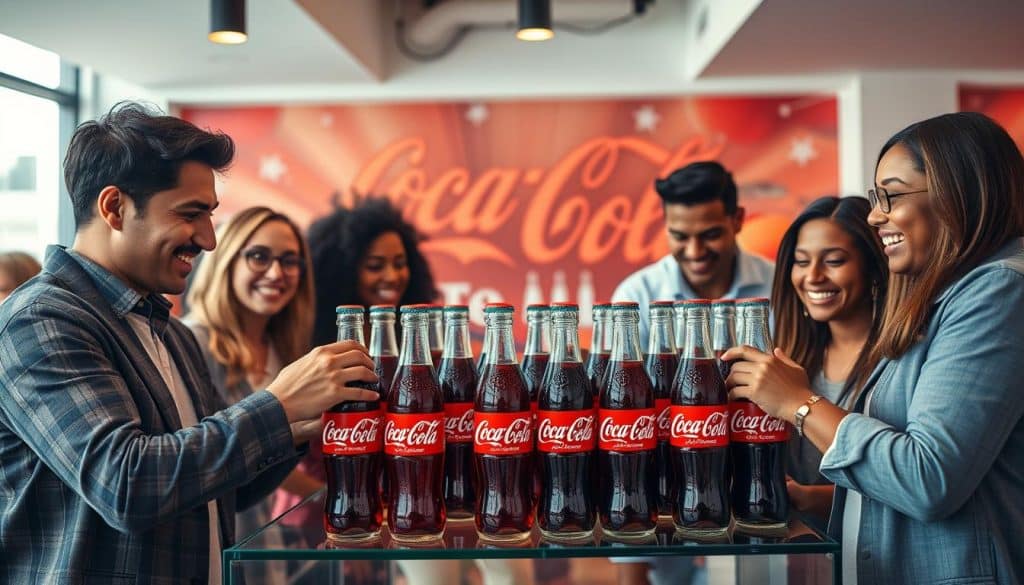
The campaign hit the right time in social media history. Instagram was just starting to grow, and photo-sharing was becoming key. The personalized bottles became instantly shareable content.
In 2014, over 500,000 photos flooded social media with the #ShareACoke hashtag. Each photo was free advertising, thanks to consumers who became brand ambassadors.
This social media buzz showed several key points:
- User-generated content was more authentic than paid ads
- Each share reached new people through personal networks
- The campaign’s viral nature gave it huge reach beyond traditional budgets
- Posting became its own reward, giving users social recognition
The campaign turned customers into content creators. This shift changed how marketing works today. Brands provide the platform, but consumers drive the story.
Cultural Impact and Emotional Connection
Share a Coke went beyond just advertising. It became part of everyday life, appearing in comedy routines and casual talks. Five out of twelve comedians in Sydney even used Share a Coke jokes in their acts.
Consumers used the bottles in unexpected ways. They connected with soldiers in Afghanistan, patients in hospitals, and even estranged friends. The bottles became symbols of care and connection.
This emotional depth came from consumers, not the brand. It showed how the campaign provided a tool for people to express themselves. This is what makes classic commercials great: they give value and let people decide its worth.
Creating Shareworthy Moments Across Canada
In Canada, the campaign resonated with diverse communities. It respected individual identity while bringing people together. Canadians loved celebrating their names and sharing bottles with friends and family.
These moments went beyond just buying a drink. Workplaces had bottle hunts, and families collected bottles for every member. These shared experiences made the campaign even more impactful.
Canadians appreciated the campaign’s inclusivity. The names used reflected Canada’s diversity, celebrating its multicultural society. This sensitivity strengthened the bond between the brand and its audience.
Brand Storytelling Through Consumer Participation
Traditional brand storytelling is one-way. Share a Coke flipped this, letting consumers tell their own stories. Each personalized bottle became a chapter in countless personal tales.
This approach was incredibly effective. It celebrated celebrations, reunions, and even apologies. The brand trusted consumers to create their own stories, showing a deep level of trust.
Different countries added their own twists, respecting local cultures:
- Great Britain: Honored the royal baby with “Share a Coke with Wills and Kate” on Piccadilly Circus
- China: Used nicknames on cans, fitting cultural naming practices
- South Africa: Created the “Bobby” TV commercial, one of Coca-Cola’s highest-scoring ads
- Germany: Launched an online store for home delivery of personalized bottles
- Amsterdam: Opened a pop-up store for customized bottles
These adaptations showed a deep understanding of local markets. They kept the campaign’s core idea while making it culturally relevant.
Measurable Success and Industry Recognition
The campaign brought real business results, justifying the investment. Nielsen data showed a 2% increase in soft drink sales in the United States in summer 2014. This was a significant boost in a competitive market.
The campaign’s global reach was impressive. Over 80 countries participated, selling more than one billion personalized bottles worldwide. These numbers showed the campaign’s universal appeal and Coca-Cola’s global success.
Consumer sentiment metrics were also impressive. A Marketing Week study found that 51% of consumers felt a more positive connection with Coca-Cola after seeing or getting a personalized bottle. This showed lasting value beyond just sales.
The industry recognized the campaign’s innovation and success. Share a Coke won seven Cannes Lions awards, proving it was a best practice in marketing. This recognition from peers confirmed the campaign’s excellence.
We believe these results show principles that apply across industries. The mix of personalization, emotional connection, consumer participation, and social amplification offers a framework for businesses. The campaign succeeded by understanding consumer desires, taking creative risks, and maintaining genuine human connection. This is the approach we take to help Canadian businesses improve their brand storytelling and achieve real results.
Conclusion
The Share a Coke campaign is a legend in advertising. It didn’t need a huge budget to succeed. Jeremy Rudge said it could be done today with a small fraction of what was spent on TV.
He believes the real investment should be in creating ideas people want to share. Not in buying media to push messages.
Lucie Austin summed it up well: your name is the most personal thing you own. The campaign let people show their personality through Coke bottles. It was a hit because it made people feel special.
This success came with big challenges. Making personalized bottles on a huge scale was tough. But the cultural impact and results were worth it.
For Canadian businesses, the Share a Coke story shows a key truth. Connection is more important than just selling. You don’t need to put names on a billion bottles to make a difference.
You can make your customers the stars. Give them experiences they’ll want to share. And solve problems in creative ways.
We think the best ad slogans don’t just tell a story. They invite people to join in. That’s what we do in every partnership. We combine strategic vision with execution to make innovative ideas work.
FAQ
When did the Share a Coke campaign first launch?
The Share a Coke campaign started in Australia in 2011. It was a huge hit there. Then, it went to New Zealand, Asia, and the world. It won big at the 2012 Cannes Lions festival.
FAQ
When did the Share a Coke campaign first launch?
The Share a Coke campaign started in Australia in 2011. It was a huge hit there. Then, it went to New Zealand, Asia, and the world. It won big at the 2012 Cannes Lions festival.
How many names were included in the original Share a Coke campaign?
FAQ
When did the Share a Coke campaign first launch?
The Share a Coke campaign started in Australia in 2011. It was a huge hit there. Then, it went to New Zealand, Asia, and the world. It won big at the 2012 Cannes Lions festival.
FAQ
When did the Share a Coke campaign first launch?
The Share a Coke campaign started in Australia in 2011. It was a huge hit there. Then, it went to New Zealand, Asia, and the world. It won big at the 2012 Cannes Lions festival.
What measurable results did the Share a Coke campaign achieve?
FAQ
When did the Share a Coke campaign first launch?
The Share a Coke campaign started in Australia in 2011. It was a huge hit there. Then, it went to New Zealand, Asia, and the world. It won big at the 2012 Cannes Lions festival.
FAQ
When did the Share a Coke campaign first launch?
The Share a Coke campaign started in Australia in 2011. It was a huge hit there. Then, it went to New Zealand, Asia, and the world. It won big at the 2012 Cannes Lions festival.
Why did Coca-Cola put names on bottles instead of other personalizations?
FAQ
When did the Share a Coke campaign first launch?
The Share a Coke campaign started in Australia in 2011. It was a huge hit there. Then, it went to New Zealand, Asia, and the world. It won big at the 2012 Cannes Lions festival.
FAQ
When did the Share a Coke campaign first launch?
The Share a Coke campaign started in Australia in 2011. It was a huge hit there. Then, it went to New Zealand, Asia, and the world. It won big at the 2012 Cannes Lions festival.
How did the Share a Coke campaign leverage social media?
FAQ
When did the Share a Coke campaign first launch?
The Share a Coke campaign started in Australia in 2011. It was a huge hit there. Then, it went to New Zealand, Asia, and the world. It won big at the 2012 Cannes Lions festival.
FAQ
When did the Share a Coke campaign first launch?
The Share a Coke campaign started in Australia in 2011. It was a huge hit there. Then, it went to New Zealand, Asia, and the world. It won big at the 2012 Cannes Lions festival.
What technical challenges did Coca-Cola face implementing personalized bottles?
FAQ
When did the Share a Coke campaign first launch?
The Share a Coke campaign started in Australia in 2011. It was a huge hit there. Then, it went to New Zealand, Asia, and the world. It won big at the 2012 Cannes Lions festival.
FAQ
When did the Share a Coke campaign first launch?
The Share a Coke campaign started in Australia in 2011. It was a huge hit there. Then, it went to New Zealand, Asia, and the world. It won big at the 2012 Cannes Lions festival.
How did the campaign adapt for different countries and cultures?
FAQ
When did the Share a Coke campaign first launch?
The Share a Coke campaign started in Australia in 2011. It was a huge hit there. Then, it went to New Zealand, Asia, and the world. It won big at the 2012 Cannes Lions festival.
FAQ
When did the Share a Coke campaign first launch?
The Share a Coke campaign started in Australia in 2011. It was a huge hit there. Then, it went to New Zealand, Asia, and the world. It won big at the 2012 Cannes Lions festival.
What was the strategic thinking behind emphasising "sharing" instead of "keeping"?
FAQ
When did the Share a Coke campaign first launch?
The Share a Coke campaign started in Australia in 2011. It was a huge hit there. Then, it went to New Zealand, Asia, and the world. It won big at the 2012 Cannes Lions festival.
FAQ
When did the Share a Coke campaign first launch?
The Share a Coke campaign started in Australia in 2011. It was a huge hit there. Then, it went to New Zealand, Asia, and the world. It won big at the 2012 Cannes Lions festival.
How did the Share a Coke campaign change brand storytelling?
FAQ
When did the Share a Coke campaign first launch?
The Share a Coke campaign started in Australia in 2011. It was a huge hit there. Then, it went to New Zealand, Asia, and the world. It won big at the 2012 Cannes Lions festival.
FAQ
When did the Share a Coke campaign first launch?
The Share a Coke campaign started in Australia in 2011. It was a huge hit there. Then, it went to New Zealand, Asia, and the world. It won big at the 2012 Cannes Lions festival.
What lessons can Canadian businesses learn from the Share a Coke campaign?
FAQ
When did the Share a Coke campaign first launch?
The Share a Coke campaign started in Australia in 2011. It was a huge hit there. Then, it went to New Zealand, Asia, and the world. It won big at the 2012 Cannes Lions festival.
FAQ
When did the Share a Coke campaign first launch?
The Share a Coke campaign started in Australia in 2011. It was a huge hit there. Then, it went to New Zealand, Asia, and the world. It won big at the 2012 Cannes Lions festival.
How did Share a Coke address the challenge of mature market growth?
FAQ
When did the Share a Coke campaign first launch?
The Share a Coke campaign started in Australia in 2011. It was a huge hit there. Then, it went to New Zealand, Asia, and the world. It won big at the 2012 Cannes Lions festival.
FAQ
When did the Share a Coke campaign first launch?
The Share a Coke campaign started in Australia in 2011. It was a huge hit there. Then, it went to New Zealand, Asia, and the world. It won big at the 2012 Cannes Lions festival.
What role did consumer-generated content play in the campaign's success?
FAQ
When did the Share a Coke campaign first launch?
The Share a Coke campaign started in Australia in 2011. It was a huge hit there. Then, it went to New Zealand, Asia, and the world. It won big at the 2012 Cannes Lions festival.
FAQ
When did the Share a Coke campaign first launch?
The Share a Coke campaign started in Australia in 2011. It was a huge hit there. Then, it went to New Zealand, Asia, and the world. It won big at the 2012 Cannes Lions festival.