





Did you know that 71% of search traffic clicks happen on Google’s first page? This fact shows why it’s key to balance technical SEO with storytelling. Businesses need to shine online more than ever.
The digital marketing world is now a $80 billion industry. Success comes from knowing algorithms and human psychology. Today’s writers must mix analysis with creativity to meet search intent and engage readers.
We know how to make content rank well and engage your audience. Our method combines technical skills with storytelling. This way, your pages attract visitors and turn them into loyal customers.
In this guide, we’ll share effective techniques for your content marketing. We’ll cover modern algorithms and user-focused practices. You’ll learn how to create strategies that boost your Canadian business’s results.
Key Takeaways
- 71% of search traffic clicks occur on the first page of Google results
- Effective strategies balance technical optimization with engaging storytelling
- Understanding search intent is crucial for creating relevant content
- The digital marketing industry represents an $80 billion field
- Modern content creation requires both analytical and creative skills
- Technical optimization alone isn’t enough – human engagement matters
SEO & Website Optimization
Rank Higher, Convert Faster!
Optimize your site for better search rankings and increased traffic. Let’s boost your visibility today!
SEO Content Strategy and Writing Techniques: Finding the Balance
Search engine algorithms have changed how we make content. Now, we need to balance technical optimization with what readers want. Stuffing keywords is not enough anymore. Today, we must meet both search engine needs and human reader expectations.
We’ve seen this change help businesses in digital marketing. Finding the right mix of SEO and engaging content is an art. It leads to real business success when done right.
Understanding Search Engine Algorithms in 2025
Search engines have changed a lot in recent years. They now focus more on what users want, not just keywords. Google uses advanced technology to understand content better.
In 2025, these algorithms can do a lot:
- They get natural language and questions.
- They check content quality by how users interact with it.
- They look at how well a topic is covered, not just keywords.
- They judge content based on its expertise, trustworthiness, and authority.
Google wants content that really helps users. Pages that answer questions well rank better. Your content strategy needs to be more than just keywords.
Search engines look at many signs of quality, like how long users stay. If users find your content valuable, they’ll stay longer and come back. This tells search engines your content is good, which can help your ranking.
Recognizing Human Reading Patterns and User Intent
Writing for humans is key to good content strategy. Today’s readers scan content, not read it word by word. Only 16% read web pages from start to finish.
People don’t read web pages, they scan them. Only 16% of people read web pages word-by-word.
Nielsen Norman Group
So, making content easy to scan is crucial for effective on-page SEO. Use headings, lists, and bold text to help readers find what they need quickly.
Understanding user intent is also important. We group search queries into four main types:
- Informational – Seeking knowledge or answers (“how to improve website SEO”)
- Navigational – Looking for a specific website or page (“Facebook login”)
- Commercial – Researching before making a purchase (“best digital marketing agencies”)
- Transactional – Ready to complete an action or purchase (“buy SEO software”)
By matching your content with the intent behind keywords, you help your audience. This makes your content more relevant and engaging, which improves rankings.
Long, detailed content tends to rank better in Google. But, it’s not just about length. Your content must stay interesting and relevant. We’ve seen that content that’s both deep and easy to follow works best.
Page speed is also key for user experience. Fast-loading content keeps users interested, reducing bounce rates. This technical aspect of content delivery affects how users feel, showing the link between SEO and user experience.
By understanding how people read and making content that meets their needs, we can help you succeed. This balanced approach leads to better rankings and more engagement, the goals of any good content strategy.
Effective Keyword Research for Content Creation
Effective keyword research is more than finding popular terms. It’s about finding the exact words your audience uses to find solutions. We blend data with a deep understanding of what readers want. This way, keyword research helps us create content that truly meets their needs.
We look for keyword clusters that cover all aspects of a topic. This ensures your content answers all questions and concerns. By mapping these clusters to your content strategy, we help you become an authority in your field.
Analyzing Search Intent for Targeted Content
Understanding search intent is key to creating content that works. We go beyond just looking at keyword volumes. We figure out why people are searching for things.
For example, if people are looking for information, we create detailed guides. For those ready to buy, we focus on comparison pieces and product highlights. And for those making a purchase, we make sure our content helps them make a decision.
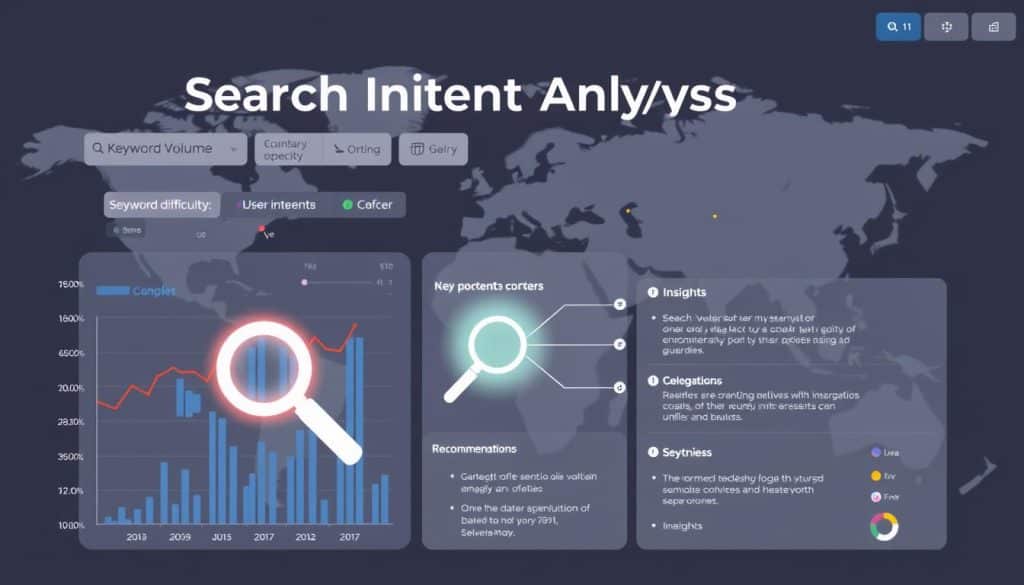
By matching your content with search intent, we make sure it’s there when your audience needs it. This approach boosts your rankings and engagement, like time on page and conversion rates.
Implementing Long-Tail Keywords Strategically
Long-tail keywords are SEO’s hidden treasures. They’re specific phrases with less competition but more qualified traffic. Instead of targeting broad terms, we aim for specific phrases like “B2B content marketing strategy for technology companies.”
We use these longer phrases in your content where they add value. This includes headers, opening paragraphs, image alt text, and conclusion sections.
- Headers and subheaders that organize content logically
- Opening paragraphs that establish relevance
- Image alt text that reinforces key concepts
- Conclusion sections that reinforce solutions
Long-tail keywords can rank your content for many related searches. A well-written article targeting a specific long-tail phrase can attract traffic from dozens of related searches.
Semantic SEO and Related Terms
Semantic SEO is the next step in keyword optimization. We focus on related concepts and natural language variations. This approach aligns with how search engines work today.
When we create content using semantic principles, we cover the whole topic landscape. For example, for “home renovation,” we include terms like “remodeling,” “contractors,” and “budgeting.” This makes your content a comprehensive resource that shows your expertise.
We use tools like SEMrush, Ahrefs, and Google’s Keyword Planner for our research. But we always keep in mind what will truly help your audience. This way, our content meets both search engine needs and human readers’ expectations.
“The best SEO strategies don’t chase algorithms—they anticipate user needs and create content that fulfills those needs better than any competitor.”
By focusing on thorough keyword research, intent analysis, and semantic understanding, we create content that attracts traffic for years. This turns your content into a valuable asset that grows over time.
On-Page Optimization That Enhances User Experience
On-page SEO is key for both search performance and user engagement. The best sites see optimization as a chance to make content that appeals to algorithms and people. It’s not just about following a checklist.
Optimization is more than just keywords. It’s about how your page is set up and the signals for search engines. Good on-page SEO also makes your site better for visitors.

Crafting Compelling Meta Descriptions
Meta descriptions are your content’s first look in search results. They don’t directly affect rankings but do impact click-through rates. We write these 150-160 character summaries to draw in readers.
A good meta description should:
- Include your target keywords naturally without feeling forced
- Clearly communicate the value proposition of your content
- Create appropriate expectations about what readers will find
- Include a subtle call-to-action that encourages clicks
For example, instead of “Learn about on-page SEO in our guide,” we might write: “Discover actionable on-page SEO techniques that boost both rankings and user engagement. Our expert guide shows you how to optimize for 2025’s algorithms.“
This example creates excitement and clearly states the content’s value. We’ve seen descriptive, benefit-focusedmeta tagsimprove click-through rates by up to 30%.
Content Structure for Both Crawlers and Readers
How you organize your content is vital for both search engines and readers. We use proper heading tags (H1, H2, H3) to help search engines understand your content. This also makes it easy for readers to navigate.
Breaking content into sections with clear subheadings helps a lot. Since 79% of users scan web content, a well-organized page is crucial. It lets visitors find what they need quickly.
Strategic internallink buildingwithin your content serves multiple purposes:
- Distributes page authority throughout your site
- Keeps readers engaged by guiding them to related content
- Helps search engines discover and understand your site’s structure
- Reduces bounce rates by providing natural navigation paths
We use links naturally, with descriptive anchor text. This avoids keyword-stuffed links while still giving search engines useful signals.
Readability Factors That Influence Rankings and Engagement
Readability is now a key ranking signal, as search engines focus on user experience. Content that’s hard to read or poorly formatted leads to higher bounce rates. This is bad for search engines.
We make content easy to read by:
- Using proper sentence and paragraph lengths
- Maintaining a conversational tone
- Ensuring content is accessible to your target audience
- Incorporating visual breaks with lists, images, and white space
Tools like the Flesch-Kincaid readability score help us check complexity. But we always prioritize clarity for your audience. Even in technical content, clarity is key.
“The best SEO content is written for humans first, then optimized for search engines—never the other way around.”
Content length is also important. While longer content (around 1,400-1,600 words) often ranks better, quality is more important. Every word should add value to your readers. We focus on covering topics fully, not just meeting word counts.
Mobile readability is crucial in youron-page SEOstrategy. With mobile-first indexing, your content must be easy to read on smaller screens. This means shorter paragraphs, clear headings, and touch-friendly navigation.
By using these on-page optimization techniques, we create content that meets search engine needs and engages your audience. This balanced approach leads to better rankings and more meaningful engagement with your content.
Conclusion
Tracking how well your content does is key to a good SEO strategy. Regularly checking your content helps you see what’s working and what’s not. Our experience shows that focusing on quality content leads to big wins – like 97% more backlinks and 434% more indexed pages.
Google Search Console gives you important stats to help improve your content. Look at clicks, impressions, and search positions to see what needs work. This way, your SEO stays on track with what search engines and users want.
SEO content writing is a journey, not a one-time goal. We think the best strategies keep up with changes through regular checks and updates. By focusing on both technical stuff and real value for readers, your content can get noticed and engage people.
Great content doesn’t feel forced or optimized. It just gives your audience what they need in a way they can easily find. Finding this balance between what search engines want and what people need is what makes your content truly successful for your business.
FAQ
What is SEO content strategy and why is it important?
SEO content strategy is about making content that ranks well in search engines and is useful to people. It’s key because most search traffic goes to the first page of Google. A good strategy mixes technical stuff with storytelling to attract and keep visitors.
How have search engine algorithms evolved in 2025?
In 2025, search engines are smarter at understanding what people want. They look at how long you stay on a page and how you interact with it. This means your content should cover topics well and engage users, not just use keywords.
What is search intent and how does it affect content creation?
Search intent is why someone searches for something. It could be to learn, buy, or compare. Knowing this helps you make content that meets users’ needs. This makes your content more relevant and can improve your ranking.
How do you implement long-tail keywords effectively?
Use long-tail keywords where they fit naturally in your content. Instead of just “content marketing,” use “B2B content marketing strategy.” This attracts the right people and is less competitive.
What is semantic SEO and why is it important?
Semantic SEO is about using related terms and synonyms in your content. It’s important because search engines now understand topics, not just keywords. This makes your content seem more comprehensive and natural.
How do meta descriptions impact SEO performance?
Meta descriptions don’t directly affect rankings but can boost click-through rates. They’re like ads for your content in search results. Make them compelling and include relevant keywords to encourage clicks.
What role does content structure play in SEO?
Content structure is key for both search engines and readers. Use headings and subheadings to organize your content. This makes it easier to read and understand, which search engines favor.
How important is readability for SEO rankings?
Readability is very important for SEO. Search engines want content that’s easy to read and understand. Use clear language and make sure your content is accessible to your audience.
What are content audits and why should I conduct them?
Content audits review your existing content to find what’s not working and what’s missing. They help you refine your strategy for better results. Regular audits keep your content relevant and effective.
How do internal links benefit SEO content strategy?
Internal links help distribute authority and keep readers engaged. They also help search engines understand your site’s structure. Use them wisely to improve your SEO and user experience.
What statistics show the impact of consistent quality content?
Consistent quality content leads to more backlinks, indexed pages, and visitors. It shows that investing in good content pays off over time.
How do you balance writing for search engines and human readers?
Focus on creating content that truly serves your audience while following SEO guidelines. The best content is useful and engaging, not just for search engines. Use keywords wisely and make sure your content delivers value.