


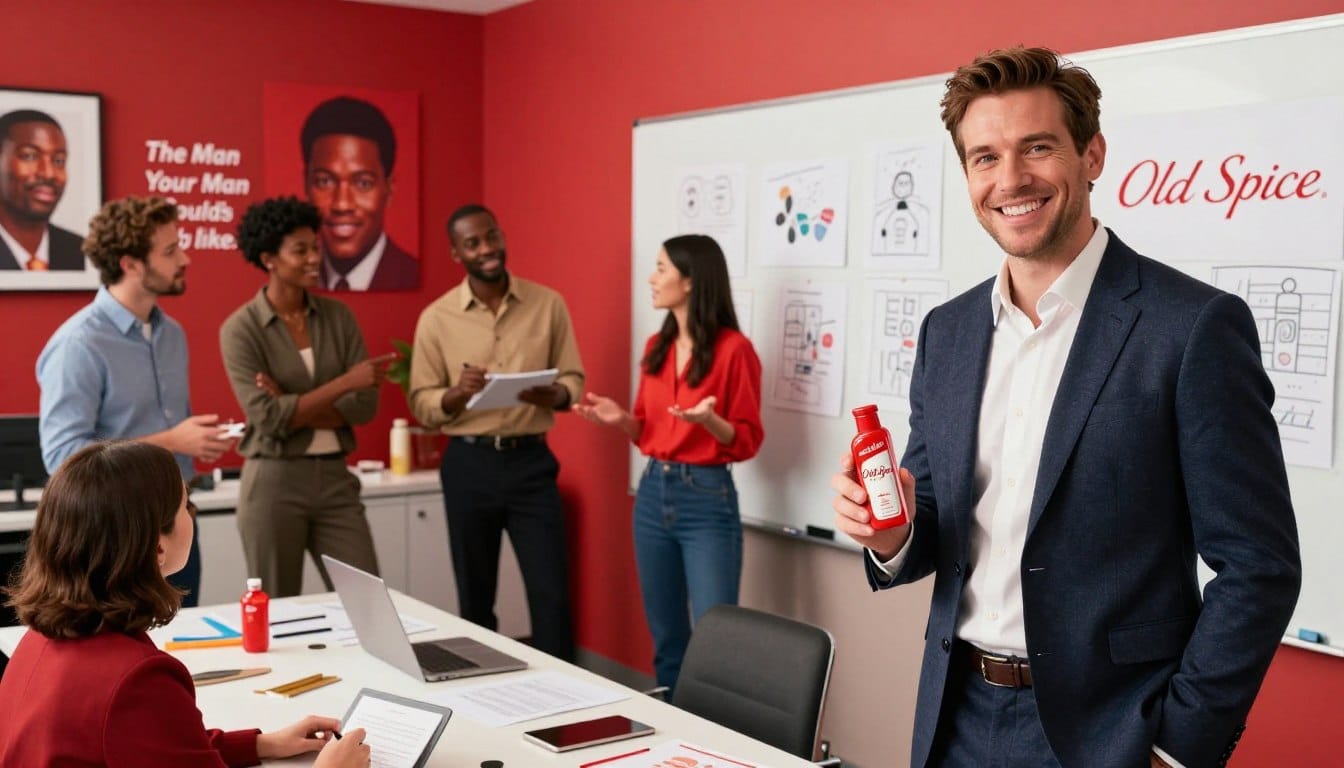


Can a single campaign turn a dying brand into a cultural phenomenon that takes over social media and boosts sales overnight? The Old Spice campaign did just that. It showed that bold creative ideas can save even the oldest brands.
We’re looking at one of the most amazing turnarounds in modern marketing. The Old Spice campaign took a struggling legacy brand and made it a powerhouse. It did this through iconic ads that spoke to people of all ages.
This case study shows how strategic audience targeting and creative execution can lead to big changes. For business owners and marketers in Canada, we’ll dive into what made this campaign unforgettable.
You’ll learn how to apply these lessons to your own branding challenges. We’ll cover the strategic choices, results, and lessons that are useful for any industry or market.
Key Takeaways
- Old Spice transformed from an outdated brand to a cultural sensation through bold creative strategy and precise audience targeting
- The campaign successfully shifted brand perception from “your grandfather’s cologne” to a must-have product for younger consumers
- Strategic use of humor, viral content, and real-time social media engagement created unprecedented brand awareness and sales growth
- Measurable results included double-digit sales increases and millions of social media impressions within weeks of launch
- The success demonstrates that legacy brands can achieve remarkable revivals through innovative marketing approaches
- Key lessons include the importance of understanding your audience, taking creative risks, and maintaining consistent brand messaging across channels
The Decline of a Once-Dominant Men's Grooming Brand
By the mid-2000s, Old Spice was a cautionary tale of brand stagnation. It struggled to stay relevant in a market it once led. What was once America’s top men’s grooming brand became something less desirable: a product seen as yesteryear instead of tomorrow.
The Grandfather Problem: Understanding Aging Demographics
Old Spice had a big problem known as the “grandfather problem.” Young men aged 18-34 didn’t see Old Spice as a grooming choice for themselves. They associated it with their grandfathers and fathers.
This problem was more than just preference. Market research showed that the most valuable consumer segment in men’s grooming rejected Old Spice as outdated. The brand’s nostalgic advertisements connected with older generations but alienated younger buyers.
This created a dangerous cycle. As younger consumers rejected the brand, Old Spice’s customer base grew older and smaller each year. Without change, the brand faced a future where its core consumers would age out.
Navigating the Competitive Battlefield
Procter & Gamble had a brand fighting on two fronts in a competitive market. The men’s grooming market had exploded with new brands, taking Old Spice’s territory. The challenge was to create a complete rebranding success strategy.
Old Spice was stuck in the middle. Here’s what the brand faced:
- Youth-focused competitors dominated the 18-24 demographic with bold, contemporary marketing that made Old Spice look old-fashioned
- Premium brands won loyalty from established users with elevated experiences and modern formulations
- New market entrants brought innovative products and fresh perspectives that appealed to changing consumer preferences
- Retail dynamics favored brands with momentum, giving competitors better shelf placement and promotional support
The brand was too old for young buyers looking for modern grooming solutions. Yet, it wasn’t premium enough to keep its existing customers loyal. This left Old Spice vulnerable to losing customers from both sides.
Procter & Gamble had to navigate a delicate balance. They needed to change younger consumers’ perceptions with a rebranding success. But they couldn’t lose the loyal customers who valued the brand’s heritage and reliability.
The Birth of Iconic Advertising: Strategy Behind the Campaign
The Old Spice campaign shows how thinking differently can change a brand’s image. It started with insights that challenged the usual ways of doing things in the men’s grooming world. Procter & Gamble and their partners found new ways to stand out.
Targeting Women as Primary Purchasers of Men's Products
Research showed women buy about 60% of men’s body wash. This fact changed how they thought about who to advertise to. It was a big shift away from the usual approach.
The ads talked to women but also appealed to men. This needed careful creative work. The tone had to win over women but not lose men.
Here’s what made this strategy smart:
- Purchase influence recognition: Recognizing women’s role in buying decisions
- Message customization: Creating content that appealed to women’s tastes
- Relationship dynamics: Showing Old Spice as something women want their partners to use
- Category disruption: Moving away from the usual tough guy ads
This approach changed how Old Spice was seen. Instead of just selling body wash, it sold a confident image.
Wieden+Kennedy's Bold Creative Direction
Wieden+Kennedy, known for Nike’s “Just Do It,” brought bold ideas to Old Spice. They were experts in creating memorable ads. They knew Old Spice needed a complete makeover.
The team rejected the usual men’s grooming ads. They wanted something different. They used humor and absurd images.
We’re not just selling body wash. We’re selling an aspirational identity wrapped in entertainment that people actually want to watch.
This creative idea had several key parts:
- Direct address: The spokesman talked directly to viewers
- Rapid transitions: Scenes changed fast, surprising and delighting viewers
- Self-awareness: The campaign knew it was absurd but didn’t let that undermine its message
- Confidence without arrogance: The humor balanced aspiration, making the message relatable
Isaiah Mustafa: Casting the Perfect Spokesman
Choosing Isaiah Mustafa was a game-changer for Old Spice. He had the athletic credibility and comedic timing needed. His background in acting added to the campaign’s success.
Mustafa had qualities that appealed to everyone. He was confident, attractive, and funny. His performance made the ads engaging and memorable.
Here’s why Mustafa was the perfect choice:
- Cross-gender appeal: Women found him attractive, while men saw him as aspirational
- Comedic intelligence: He knew the joke and played it fully
- Physical presence: His athletic build showed masculinity without being too much
- Vocal quality: His voice was instantly recognizable and often parodied
Mustafa became a key part of the campaign’s identity. His performance turned simple lines into cultural phrases. His charisma made watching the ads enjoyable.
The One-Shot Commercial Technique
The way the ads were made was unique. They were filmed in one shot, showing off the production’s quality. This showed the brand’s confidence and creativity.
The setting changed around Mustafa in each ad. He went from a shower to a boat to a beach in 30 seconds. These quick changes made the ads memorable.
This method highlighted the campaign’s message of change. Just like the setting changed around Mustafa, Old Spice had changed from old to new. This technique became a key part of the brand’s identity.
The mix of smart ideas, bold creativity, perfect casting, and innovative production made the ads special. They went beyond just selling a product. They became a cultural phenomenon that people wanted to see and share.
Viral Success and Measurable Brand Revival
Old Spice’s 2010 campaign is a rare example of a viral hit that also boosted business. It shows how creativity and planning can turn a struggling brand into a leader. The mix of traditional TV and digital engagement is a blueprint for marketers today.
Super Bowl 2010 Launch and Immediate Cultural Impact
The Super Bowl XLIV broadcast was the perfect time to introduce “The Man Your Man Could Smell Like.” It reached over 106 million viewers, hitting the right demographic. The ad aired during the third quarter, when viewers were most engaged.
Social media buzzed with the ad almost instantly. Twitter mentions of Old Spice jumped by 2,700% overnight. YouTube views soared without paid ads. This was true organic sharing, driven by entertainment value.
The ad quickly became a cultural hit. People from all walks of life made parodies and references. Late-night shows and news outlets covered it as a cultural phenomenon.
Social Media Engagement and Real-Time Response Videos
The Old Spice campaign went beyond the ads. In July 2010, they started a social media engagement effort. They made 186 personalized video responses in just 48 hours. Isaiah Mustafa replied to tweets, Facebook comments, and questions from fans and celebrities.
This real-time strategy showed marketing agility. The team worked non-stop, filming in the same bathroom set. They responded to celebrities and everyday fans, making them feel special.
The response videos got 40 million views in one week. Each response got hundreds of thousands of views. This turned viewers into active participants, deepening their connection with the brand.
Sales Growth and Market Position Recovery
The campaign’s success is clear in its business results. Old Spice became the leading men’s body wash brand in North America within six months. This was a complete turnaround for the brand.
Sales figures showed a big increase. Old Spice body wash sales rose by 125% in the first year. Website traffic and social media followers also surged. These changes showed lasting consumer interest and behavior changes.
Quantifiable Results Across North America
Here are the key results that make this campaign a classic:
| Performance Metric | Pre-Campaign Baseline | 6-Month Results | Percentage Change |
|---|---|---|---|
| Body Wash Sales Volume | $420 million annually | $945 million annually | +125% |
| Market Share Position | #2 in North America | #1 in North America | Category Leader |
| Website Traffic (Monthly) | 1.2 million visits | 4.8 million visits | +300% |
| Social Media Followers | 75,000 combined | 1.3 million combined | +1,633% |
| Brand Perception (18-34 Age) | 28% “relevant to me” | 67% “relevant to me” | +139% |
The campaign won many awards, including an Emmy and the Grand Prix at Cannes Lions. It’s now a key part of marketing education in North America. The cultural impact marketing lessons from Old Spice continue to shape digital engagement and campaigns.
In Canada, the campaign was even more successful, with sales up 137% in Canada in the first year. The humor and tone resonated well with Canadian consumers, showing that authentic messaging can work across regions.
Conclusion
The Old Spice transformation is a masterpiece of Madison Avenue. It solved a real business challenge with creative strategy. The campaign didn’t just use big budgets. It spoke directly to the people who make buying decisions in unexpected ways.
This case study teaches us important lessons for all industries. Challenge your assumptions about your audience. Make content that entertains, not just promotes. Use platforms where your customers already spend time. And, do everything with excellence.
The campaign gave us one of the most memorable ad slogans ever. “The Man Your Man Could Smell Like” is a phrase that’s stuck with us for years. This success came from real insight and bold creativity.
Canadian businesses facing rebranding challenges can learn from this. You don’t need to spend on Super Bowl ads to use these strategies. You need courage to challenge the status quo and a deep understanding of your customers.
We urge you to look at your brand with fresh eyes. Think about what truly connects with your audience in unexpected ways. That’s where real change begins. That’s where you’ll see results. The Old Spice story shows that creative strategy can lead to real success when based on solid consumer insights.