


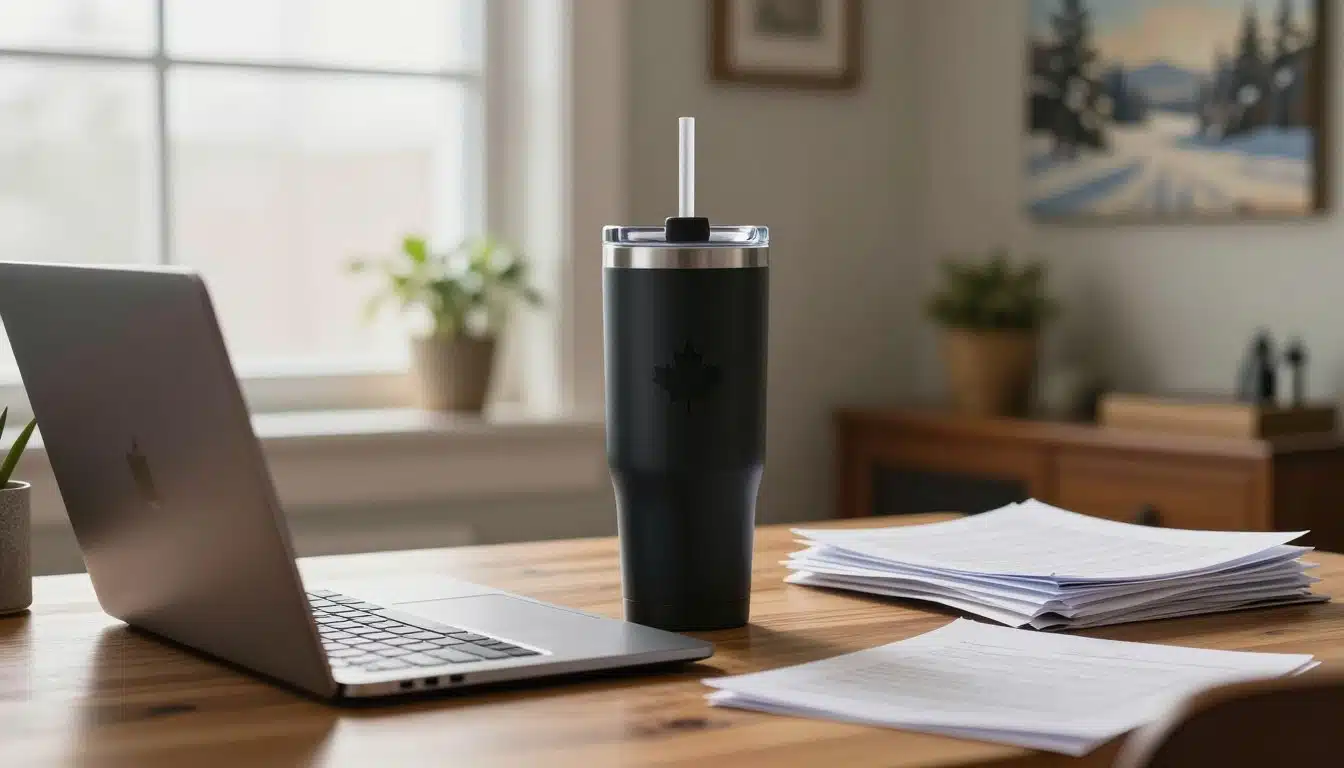


The Quencher went viral because a useful tumbler became a colourful lifestyle accessory, amplified by social sharing. That shift explains the Stanley Cups viral obsession, which blends everyday design with trend appeal. Stanley Cups here means drink tumblers, not the NHL championship trophy. For Canadians, the question is whether this product earns a place in a daily routine or mainly sells the latest look.
Stanley began in 1913, and the Quencher arrived in 2016. Its rise also touched hydration habits, as customers showed how they used it at work, in cars and at the gym. A strong product helped, but social momentum gave it a role beyond holding a drink.
We assess the design, the marketing and the ownership concerns to help you judge the hype. A practical verdict starts with whether the cup fits a buyer’s daily routine, not whether the next colour is trending.
Key Takeaways
- Useful design helped the Quencher stand out.
- Creator posts and customer videos made demand easy to see.
- The H2.0 comes in two large sizes.
- Its lid resists splashes but does not seal a bag.
- Frequent use makes its price easier to justify.
- A damaged base cap needs attention.
Why the Stanley Cups Viral Obsession Took Off
The tumbler’s turning point came when creators showed Stanley an audience and use case its earlier positioning had not prioritized. Creator-led interest helped move it from an overlooked product into a widely discussed accessory.
The Buy Guide helped reposition an overlooked tumbler
The Buy Guide began in 2017 and connected readers with products through affiliate marketing. Its team ordered 10,000 tumblers, selling the first 5,000 in about four days and the next 5,000 in an hour. Stanley had not prioritized the Quencher in 2019, but Terence Reilly became president in 2020.
This partnership showed how social media influencer marketing could match a product with a trusted audience. Reviews and product unboxing culture added personal proof, while collections gave customers a reason to share their picks. That is how stanley cups became a viral consumer obsession, rather than simply a popular drink container.
Stanley’s revenue rose from $74 million in 2019 to $750 million in 2023. A Quinnipiac analysis of the viral rise notes the role of short-form video and customer-created posts in expanding the product’s reach.
Social sharing and limited releases made demand visible
Customer reviews, collections and user-generated content made enthusiasm public. The hashtag #stanleycup reached 6.7 billion TikTok views. A Valentine’s release store-rush video drew 16 million TikTok views and 21 million views on X.
Collaborations and limited releases added urgency. The 2023 Lainey Wilson collaboration sold out in 11 minutes, while a car-fire video featuring a Stanley tumbler received more than 95 million views. Retail scarcity means perceived limited availability created by restricted releases or limited stock.
| Demand driver | Concrete example | Marketing effect |
|---|---|---|
| Creator partnership | First 5,000 sold in about four days; second 5,000 in an hour | Demonstrated demand through a trusted audience |
| User-generated content | #stanleycup reached 6.7 billion TikTok views | Made customer enthusiasm visible and shareable |
| Limited release | Lainey Wilson collaboration sold out in 11 minutes | Made a new colourway feel time-sensitive |
Visible enthusiasm matters most when it connects to a real use for the product.
What the Quencher H2.0 Gets Right, and Where It Falls Short
The Quencher H2.0’s strongest case is its large capacity and convenient handle for people who keep a drink close throughout the day. Daily usefulness is the key test, since its size may not suit every way of carrying a drink.
Capacity, insulation and lid controls
The H2.0 comes in 0.88-litre and 1.18-litre sizes. The larger option holds more, while the smaller one takes up less space. Its body is described as keeping drinks cold for up to 40 hours.
The FlowState lid has three positions: a straw opening, a drink opening and a full-cover top. The straw opening is designed to resist splashes and hold the reusable straw in place. Splash resistance is not the same as a sealed, leakproof design for carrying the tumbler in a bag.
The handle makes the tumbler easier to carry by hand, and its shape is designed for most car cup holders. That cupholder compatibility may help on a commute, though the large format still takes room. Stanley’s product listing describes the three-position lid, handle and cupholder fit.
The two sizes ranged from $46 to $58 CAD when the page was published. That price is easier to accept when the tumbler earns regular use, rather than sitting on a shelf between outings.
Who gets value from the design?
These buying situations can help you decide whether the format suits your day:
- Regular car commute: consider whether the handle and cup holder suit your route.
- Desk or workout use: choose it if you want a large drink close by.
- Carrying the tumbler in a bag: a smaller, sealed vessel may work better.
- Choosing mainly for a new colour: pause if the colour is the only reason.
We find the Quencher easiest to justify for frequent daily use. Buyers who want a compact, bag-friendly vessel may prefer another format. Before paying for a colourway, check that the cup’s size and carrying style suit the place you expect to use it.
The Lead Concern and the Cost of Collecting
The lead discussion is about a sealed base component, not lead on the surfaces that touch a drink. CT scans showed lead solder enclosed between the outer stainless-steel wall and a steel cap, with no path to the drink under normal conditions. An intact tumbler is different from one with a damaged base.
Stanley says lead is not present on consumer-contact or drink-contact surfaces. If the base cap comes off through ordinary use, the seal is exposed, and Stanley’s lifetime warranty covers that condition.
A court dismissal is not a final ruling on whether a product is safe.
In January 2025, a federal judge dismissed a consolidated class-action complaint for insufficiently demonstrated harm. An amended complaint was later refiled, so neither step settles the safety question in court.
Critics also argue that buying many reusable cups can weaken the point of reusability. Collecting can still bring enjoyment and a sense of community, but repeated colour drops may encourage more buying than a household needs. If the base cap comes off, stop treating the tumbler as intact and use the warranty route for that condition.
Conclusion
We would judge the Quencher by how often it will leave the cupboard, not by how quickly a colour sells out. It is easiest to justify for someone who will use its large capacity, handle and cupholder-friendly design regularly.
A collection or colour drop is a weaker reason to buy than a real daily need. Better hydration habits come from a vessel you reach for, not a shade that feels urgent. Social media influencer marketing can make a product feel essential, but your routine is the better test.
Choose the Quencher when its format solves a daily problem. Before choosing a size, picture the places you will carry it and the routine it needs to serve.