





AI personalization can increase ecommerce conversions by using behavior to make products, content, and offers relevant to shopping journeys. Relevant experiences can reduce shopping friction, but results still need measurement. What might help a ready-to-buy shopper finish an order? A conversion rate is the share of visitors who complete a chosen action, such as making a purchase. Canadian ecommerce brands can use useful signals to make shopping easier without treating every visitor the same.
Consumer expectations help explain why this matters: 71% expect personalized interactions from brands, and 76% report frustration when those expectations are unmet. Teams need to balance consumer expectations with useful, measurable changes. We help identify a clear customer need, then connect it to an outcome the business can track.
Key Takeaways
- Personalized products and content can reduce shopping friction.
- Start with a journey that shows clear purchase intent.
- Measure conversion rate alongside other business results.
- Use customer signals to solve a real shopping obstacle.
- Keep the experience useful, clear, and easy to navigate.
The strongest starting point is a shopping moment where intent is clear but an avoidable obstacle remains.
How AI Personalization Increases Conversions Across the Shopping Journey
A returning shopper who browsed a category can see related items sooner than a first-time visitor sees a generic homepage. Machine learning can use real-time behavioral data to adapt each step, helping customers find products with less effort. Personalization works best when each change helps a shopper make a clearer choice.
Results vary by brand and setup. One report found AI-driven personalization led to 25% higher conversion rates within six months of implementation. Typical results include a 5%-15% revenue lift and 10%-30% better marketing-spend efficiency. Fast-growing companies derive 40% more revenue from personalization than slower-growing peers.
Recommendations, search, and discovery
Product recommendations can use browsing, preferences, or purchase history. Predictive search can read query and browsing behavior, then offer autocomplete and semantic results. Visual discovery can match product images to interests, while bundles and virtual try-ons can build confidence.
| Method | Signal | Personalized experience | Conversion pathway |
|---|---|---|---|
| Product recommendations | Browsing, preferences, purchase history | Similar, collaborative-filtered, or frequently bought-together products | Faster discovery and cross-selling |
| Predictive search | Query and browsing behavior | Autocomplete and semantic results | Less search effort |
| Dynamic content and offers | Current page activity and likely intent | Relevant banner, call to action, or offer | Clearer next step |
| Visual discovery and bundles | Product images and related interests | Visual matches, bundles, or virtual try-ons | Greater product confidence |
Amazon reports that its AI-powered recommendation engine drives 35% of annual sales. That result is not a promise for every store. In a study of AI-driven journeys, shoppers described how inaccurate or repetitive suggestions could limit exploration and choice. Research on AI-driven customer journeys also explores consumer control.
Timely content, offers, and follow-up
Dynamic offers can respond to current page activity and likely intent. A useful offer addresses a real choice, such as shipping cost, while a surface-level copy change only swaps words. A hesitant shopper may need a relevant reminder later, sent through a channel they use. An econometric analysis found 20%-30% higher customer lifetime value with AI- and machine-learning-driven personalization, though no brand can count on that result.
Recommendations should help shoppers discover options, not narrow their choices through repeated or inaccurate suggestions.
Keep average order value as a guardrail so a conversion lift does not come at the cost of smaller baskets.
Build, test, and govern personalized experiences
A checkout test should begin with consented signals, a stated purchase goal, and a clear limit on what counts as a successful result. Customer behavior data can reveal friction across touchpoints, while 92% of businesses use AI-driven personalization for growth, up 23 percentage points year over year. Set the success measures before launch, not after an early result appears.
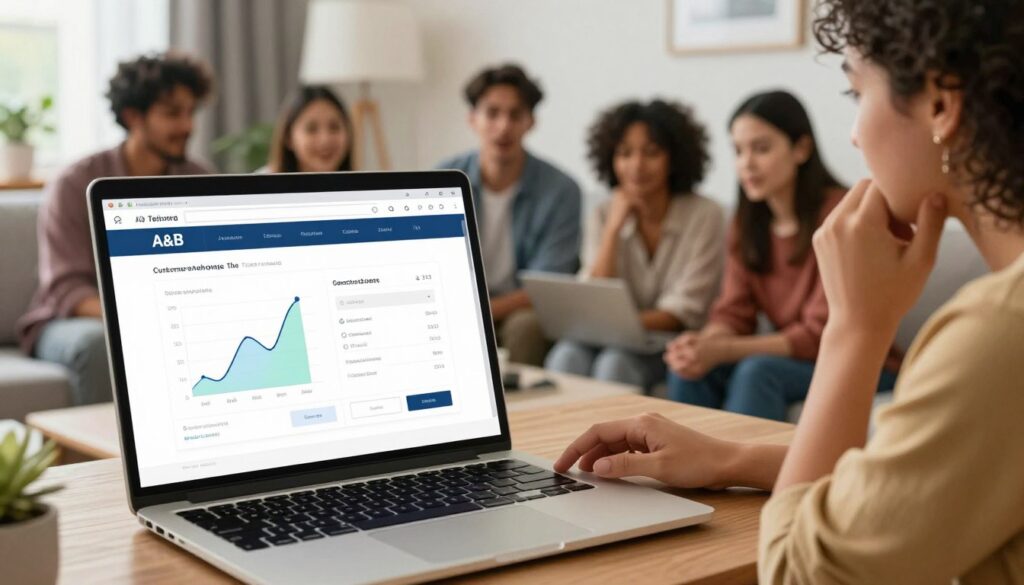
An A/B test compares a control, the original experience, with a variant, the changed experience. Choose a primary metric and the smallest lift worth acting on. Track conversion rate, revenue per visit, and average order value. A guardrail metric is a measure that must not decline; watch these alongside the primary metric instead of calling an early fluctuation a win.
Use consented data and follow Canadian privacy rules
As of November 14, 2026, PIPEDA applied to AI when teams used personal information.
Canada had no general AI law in force as of November 14, 2026. The proposed Artificial Intelligence and Data Act died in January 2025.
Quebec Law 25 requirements for automated decisions and privacy impact assessments were in force by that date. Bill C-36 was before Parliament as of November 14, 2026; its outcome remains unknown.
Test for measurable results, not a promising early signal
Set the primary metric before changing a page, then compare the variant with the control. The minimum worthwhile lift keeps a small gain from distracting the team from meaningful results. Revenue per visit can reveal a trade-off that conversion rate alone misses. Review the full test window before deciding what to keep.
Make accessibility part of the experience
AI can support people with disabilities through screen readers and speech-to-text, navigation aids, conversational agents, and predictive text. Ecommerce pages and checkout flows must also work with assistive technology. AI-generated text and images can misrepresent disability or reinforce harmful stereotypes, so include disabled people in decisions and test for barriers.
- Document the purpose and consent basis.
- Use only needed first-party behavioral signals.
- Check keyboard and assistive-technology access.
- Review outputs for disability stereotypes or exclusion.
- Monitor guardrails and technical errors after release.
Keep a brief record of each hypothesis, outcome, and lesson so the next test builds on evidence rather than assumptions.
Conclusion
A focused pilot can give your team a practical way to connect a customer need with a measurable business outcome. Pick one high-friction shopping moment, then define one purchase result that will show whether the change helped.
Keep the first effort small enough to learn from, but clear enough to guide a real decision. We can help you match the pilot to your data, platform, and team goals. Contact OneMagnify to scope a first personalization pilot around one measurable purchase outcome.