




“The beauty of a woman is not in the clothes she wears, the figure that she carries, or the way she combs her hair.” This powerful insight from Audrey Hepburn captures the essence of what would become one of the most transformative campaigns in modern advertising history.
In 2004, Dove launched something remarkable. Research revealed that only 2% of women worldwide described themselves as beautiful. This striking statistic became the foundation for a campaign that would challenge decades of industry standards.
The Real Beauty Campaign moved away from airbrushed perfection. Instead, it featured real women of diverse ages, sizes, and ethnicities. This approach to brand authenticity resonated deeply with consumers who were tired of unrealistic beauty standards.
The results were extraordinary. Dove generated over $150 million in free media coverage and transformed sales from $2.5 billion to over $4 billion within a decade. We’ve studied countless examples of emotional marketing, but few demonstrate how purpose-driven strategies can deliver both social impact and commercial success quite like this one.
This wasn’t just creative advertising. It represented a fundamental shift in brand positioning that created lasting value and sparked global conversations about self-esteem and inclusivity.
Key Takeaways
- Dove’s campaign addressed a critical insight: only 2% of women worldwide felt beautiful, creating authentic connection through purpose-driven messaging
- The shift from traditional beauty advertising to featuring real, diverse women generated $150 million in earned media coverage
- Sales growth from $2.5 billion to over $4 billion within ten years proved that authentic emotional connections drive commercial results
- The campaign transformed Dove from a commodity soap brand into a cultural advocate for inclusive beauty standards
- This example demonstrates how strategic brand positioning based on consumer psychology creates sustainable competitive advantage
- The Real Beauty Campaign remains one of the most analyzed examples for understanding how social impact and business growth can align
The Beauty Industry Challenge That Sparked a Revolution
By 2003, the beauty industry had perfected the art of making women feel inadequate, creating a multi-billion dollar opportunity for any brand brave enough to challenge the status quo.
Market Position and the Authenticity Crisis
Dove entered this crowded landscape with significant disadvantages. Since the 1950s, the brand had built recognition around its moisturizing beauty bar—a functional benefit that struggled to inspire emotional loyalty. We’ve seen this challenge repeatedly: product features alone rarely create lasting brand connections in mature markets.
The competitive landscape presented formidable challenges. Olay had claimed the territory of anti-aging science and technological innovation. Lux positioned itself around aspirational glamour and celebrity endorsement. Nivea owned the emotional space of trust, family care, and German engineering simplicity.
Dove risked becoming invisible among these powerful positioning strategies. The brand needed differentiation that went beyond moisturizing properties or dermatologist recommendations. Market research showed that consumers recognized Dove as trustworthy and gentle, but these attributes weren’t compelling enough to drive premium pricing or passionate advocacy.
| Brand | Core Positioning | Emotional Territory | Target Demographic |
|---|---|---|---|
| Olay | Anti-aging science | Youth preservation | Women 35-55 |
| Lux | Aspirational glamour | Celebrity confidence | Women 18-35 |
| Nivea | Trust and simplicity | Family care traditions | Families, all ages |
| Dove (Pre-2004) | Moisturizing benefits | Functional gentleness | Women 25-50 |
This competitive analysis revealed a critical insight: every major brand reinforced traditional beauty standards rather than challenging them. The entire industry promoted an aspirational approach that required women to feel inadequate before offering solutions. This created an authenticity crisis that consumers increasingly recognized and resented.
Consumer Research That Revealed a Critical Insight
The breakthrough came from research commissioned by Unilever in 2004. “The Real Truth About Beauty: A Global Report” surveyed 3,200 women across ten countries, exploring their relationships with beauty, self-image, and advertising. The methodology combined quantitative surveys with qualitative interviews to capture both statistical trends and emotional narratives.
The findings shocked even seasoned marketers. Only 2% of women worldwide considered themselves beautiful. This statistic revealed a massive disconnect between industry messaging and lived experiences. The research uncovered several additional insights that would shape the dove real beauty campaign strategy:
- 68% of women felt beauty standards were becoming more narrow and exclusive rather than diverse
- 76% wished advertising showed more diversity in body types, ages, and ethnicities
- 45% felt more anxious about their appearance after viewing beauty advertisements
- Only 13% were satisfied with their body weight and shape
These findings represented more than statistics—they revealed an untapped emotional territory that no competitor had claimed. We often tell clients that successful marketing campaigns begin with understanding unmet needs at a profound level. Dove’s research identified exactly that: women wanted permission to feel beautiful without conforming to impossible standards.
The research also revealed that women craved authenticity in beauty advertising. They wanted to see real people with diverse body types, ages, and ethnicities. They wanted brands to celebrate beauty rather than exploit insecurity. This desire for authenticity aligned perfectly with broader cultural trends toward transparency and genuine brand relationships.
This ad case study demonstrates a critical lesson for marketers across industries: the most compelling opportunities often exist where your entire industry has created collective frustration. Dove didn’t just identify a product gap—they discovered an emotional void that affected millions of potential customers who felt invisible in traditional beauty marketing.
The research provided the foundation for what would become one of the most celebrated dove real beauty campaigns in marketing history. By grounding their strategy in data rather than creative intuition alone, Dove ensured their message would resonate authentically with their target audience. The stage was set for a revolutionary approach that would challenge industry norms and redefine what beauty brands could represent.
How Dove Built an Emotional Marketing Strategy Around Real Beauty
Strategic emotional branding doesn’t happen by accident, and Dove’s approach demonstrated how deliberate planning transforms social messaging into business results. The company recognized that achieving breakthrough digital advertising performance required more than creative execution. It demanded a comprehensive framework that aligned brand values with consumer needs while maintaining commercial objectives.
We’ve analyzed dozens of content marketing success stories throughout our consulting work, and Dove’s campaign stands apart because of its systematic methodology. The company didn’t simply create advertisements that tugged at heartstrings. Instead, they developed an integrated strategy built on psychological principles, multi-channel execution, and measurable business outcomes.
This section examines the strategic architecture behind Dove’s Real Beauty campaign. We’ll explore the foundational principles that guided every decision and the content marketing success stories that brought those principles to life across billboards, viral videos, and social platforms.
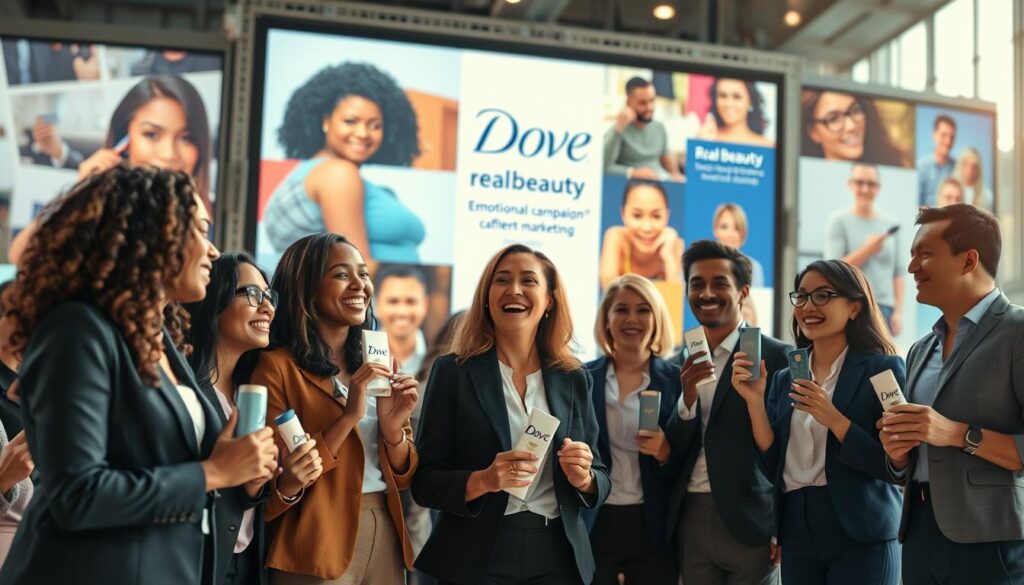
The Core Brand Authenticity Principles Behind the Campaign
Dove established three non-negotiable principles that governed every aspect of their emotional marketing strategy. These principles created internal consistency that consumers recognized and trusted, distinguishing Dove from competitors who merely appropriated social causes for commercial gain.
First, Dove committed to featuring genuinely diverse women rather than conventionally beautiful models with minor variations. The company showcased women of different ages, body types, ethnicities, and abilities. This wasn’t tokenism—it was a fundamental shift in who beauty advertising represented.
The second principle centered on eliminating digital retouching from all campaign materials. While competitors airbrushed models into impossible perfection, Dove showcased real skin textures, wrinkles, and natural body shapes. This commitment extended beyond advertising into product packaging and promotional materials.
Third, Dove extended their message into substantive programming through the Self-Esteem Project. Rather than limiting their efforts to advertising, they developed educational workshops and resources reaching over 82 million young people worldwide by 2024. This demonstrated that the campaign represented genuine corporate values rather than marketing opportunism.
Beauty is not defined by age, size, or color—it’s feeling like the best version of yourself. Authentic beauty comes from confidence.
— Dove Campaign Message
The strategy also leveraged emotional contagion—triggering positive emotions that encouraged content sharing and discussion. Additionally, the halo effect meant that Dove’s commitment to self-esteem enhanced overall brand perception across their entire product portfolio.
Most importantly, Dove understood the value-expressive function of brand choice. Purchasing Dove products became a way for consumers to signal their own values and beliefs about beauty standards. This transformed a commodity purchase into an identity statement, creating powerful brand loyalty that transcended product features.
Content Marketing Success Stories: From Billboards to Viral Videos
With foundational principles established, Dove executed a multi-phase content strategy that delivered exceptional social media marketing results across traditional and digital channels. Each campaign phase built upon previous successes while introducing innovative formats that captured cultural attention.
The brilliance of Dove’s approach lay in strategic sequencing. Early campaigns established credibility through traditional media before transitioning to digital platforms where content could achieve viral distribution. This progression demonstrated sophisticated understanding of how content marketing success stories develop across the customer journey.
The Evolution Campaign and Print Advertising
Dove’s initial 2004 launch featured real women of various ages, sizes, and ethnicities on billboards and print advertisements throughout major cities. These placements created immediate cultural disruption by providing stark contrast to surrounding beauty advertising. Commuters accustomed to airbrushed perfection suddenly encountered authentic representations of beauty.
The print campaigns generated substantial earned media coverage as journalists and commentators debated whether the advertisements represented progress or marketing manipulation. This controversy delivered millions in free publicity while positioning Dove as a cultural conversation starter. The strategic placement in high-traffic areas ensured maximum visibility among target demographics.
The 2006 “Evolution” video marked Dove’s transition into digital content. This 75-second film showed time-lapse footage of a model’s transformation through makeup and digital retouching, exposing the artificial nature of advertising imagery. The video received 1.7 million views in its first month—remarkable digital advertising performance for 2006—and won two Cannes Lions Grand Prix Awards.
| Campaign Phase | Launch Year | Primary Channel | Key Metric | Strategic Impact |
|---|---|---|---|---|
| Real Women Billboards | 2004 | Outdoor/Print | Earned media coverage | Established brand positioning |
| Evolution Video | 2006 | Digital/YouTube | 1.7M views (month 1) | Proved digital content viability |
| Real Beauty Sketches | 2013 | YouTube/Social | 50M views (12 days) | Achieved viral breakthrough |
| Self-Esteem Project | 2004-Present | Educational/Community | 82M people reached | Demonstrated authentic commitment |
“Evolution” succeeded because it provided educational value alongside emotional resonance. Viewers gained behind-the-scenes insight into advertising manipulation, creating an “aha moment” that they eagerly shared with others. This combination of revelation and validation drove organic distribution that multiplied Dove’s media investment.
Real Beauty Sketches: The Video That Changed Digital Advertising
The 2013 “Real Beauty Sketches” campaign represents the pinnacle of Dove’s content marketing success stories and arguably one of the most successful advertisements in digital history. The video featured a forensic artist who drew women twice—first based on their self-descriptions, then based on descriptions from strangers who had just met them.
The reveal was consistently striking: the stranger-described sketches depicted more attractive, confident women than the self-described versions. This visual demonstration of negative self-perception created powerful emotional impact that resonated across cultures and demographics. The message was universal: women are their own harshest critics.
The video garnered over 50 million views within just 12 days of launch, eventually surpassing 100 million views across all platforms. It was translated into 25 languages and became the most-viewed online video advertisement of all time according to multiple tracking services. These social media marketing results established new benchmarks for digital advertising performance.
We attribute the video’s success to several strategic elements. The narrative structure built suspense through the drawing process before delivering an emotional payoff during the reveal. The casting featured genuinely diverse women who were relatable rather than aspirational. The message validated women’s experiences while offering hope for changed self-perception.
The video’s production quality struck the perfect balance—professional enough to convey brand credibility but authentic enough to feel genuine rather than manipulative. Dove resisted the temptation to over-produce the content, allowing raw emotions to drive engagement. This authenticity proved essential to achieving viral distribution.
Beyond views, “Real Beauty Sketches” generated extensive earned media coverage, social media discussions, and parodies—all indicators of deep cultural penetration. The campaign sparked conversations about self-esteem, beauty standards, and media representation in mainstream publications, online forums, and social networks worldwide.
Social Media Integration and Participatory Marketing
Dove didn’t treat social media as a distribution channel for finished advertisements. Instead, they created participatory experiences that transformed consumers from passive viewers into active campaign participants. This approach delivered exceptional social media marketing results by generating organic reach that multiplied paid media investments.
The company introduced hashtags like #RealBeauty that encouraged women to share their own stories, photographs, and perspectives on beauty. These user-generated contributions created continuous content streams that kept the campaign alive between official Dove releases. Community-driven content extended campaign lifespan and maintained cultural relevance.
Dove developed the Self-Esteem Toolkit—downloadable resources for parents and educators addressing body confidence in young people. By providing practical value beyond advertising messages, Dove positioned themselves as a trusted resource rather than just another beauty brand. This content strategy built deeper relationships with consumers who viewed Dove as an ally in promoting healthy self-image.
The brand monitored social conversations and responded authentically to both praise and criticism. When controversies arose—such as perceived racial insensitivity in certain advertisements—Dove engaged directly rather than deflecting. This responsive approach demonstrated genuine commitment to dialogue rather than one-way messaging.
Social listening informed subsequent campaign development, creating a feedback loop between consumer conversations and Dove’s content strategy. The company identified emerging concerns about digital manipulation, leading to campaigns addressing photo filtering and social media’s impact on self-esteem. This responsiveness kept content relevant to evolving consumer needs.
Influencer partnerships extended reach into specific communities while maintaining authenticity. Rather than contracting traditional beauty influencers, Dove collaborated with advocates for body positivity, mental health, and youth development. These partnerships aligned with campaign principles while accessing engaged audiences predisposed to the Real Beauty message.
The integrated approach—combining paid advertising, earned media, owned content platforms, and social participation—created a self-reinforcing system. Each element amplified the others, generating compounding returns on Dove’s marketing investments. This integration distinguishes truly exceptional content marketing success stories from campaigns that rely on single-channel tactics.
Digital Marketing Case Studies: Analyzing Dove's Performance and ROI
Beyond the viral videos and cultural conversations, Dove’s Real Beauty Campaign produced quantifiable results that transformed how marketers view emotional branding. The campaign delivered exceptional performance across every business metric that matters. We examine the comprehensive roi analysis that demonstrates why Dove’s approach became a benchmark for purpose-driven marketing.
The business case for emotional marketing requires more than creative awards—it demands measurable returns. Dove’s campaign provided both immediate sales lift and long-term brand equity growth. These marketing analytics insights reveal how authentic storytelling translates into commercial success.
Marketing Analytics Insights and Conversion Rate Optimization Results
The Real Beauty Campaign generated extraordinary digital performance that exceeded traditional advertising benchmarks. The Evolution video received 1.7 million views in its first month during 2006, when viral marketing was still emerging. By 2013, Real Beauty Sketches achieved over 50 million views within just 12 days, demonstrating the campaign’s sustained relevance.
Earned media coverage provided significant value beyond paid advertising investments. The campaign generated $150 million in free media exposure through news stories, talk show appearances, and industry discussions. Major programs including The View, Good Morning America, Today Show, and Ellen featured Dove’s message without advertising costs.
Conversion rate optimization occurred through emotional connection rather than traditional funnel tactics. The campaign influenced consumer behavior at multiple stages:
- Awareness stage: Video shares, social media conversations, and news coverage expanded reach exponentially beyond paid media
- Consideration stage: Brand perception shifted from commodity soap to cultural advocate, creating emotional affinity
- Conversion stage: Product trial increased as consumers wanted to support brands aligned with their values
The online community reached over 200 million people worldwide, with 26 million actively participating in campaign activities. This engagement created multiple conversion pathways beyond traditional advertising. Consumers shared personal stories, participated in educational content, and became brand advocates.
Long-term brand equity gains resist simple quantification but represent substantial value. We recognize that traditional roi analysis captures immediate sales but may undervalue lasting brand transformation.
Brand Growth Strategies: Sales Impact and Market Share Expansion
The commercial performance validated Dove’s strategic investment in emotional branding with concrete numbers. Revenue increased from $2.5 billion in 2004 to over $4 billion within a decade of the campaign launch. This represents a compound annual growth rate of approximately 6%, outpacing many competitors in the personal care category.
Brand loyalty metrics revealed particularly impressive results. By 2006, two-thirds of Dove’s sales came from customers purchasing multiple Dove products—double the rate from 2003 before the campaign began. This shift demonstrates successful brand ecosystem building rather than single-product success.
| Performance Metric | Before Campaign (2003-2004) | After Campaign (2010-2014) | Impact |
|---|---|---|---|
| Annual Revenue | $2.5 billion | $4+ billion | 60% increase |
| Multi-Product Purchasers | 33% of sales | 67% of sales | 100% increase |
| Earned Media Value | Minimal | $150 million | Exponential growth |
| Brand Perception | Commodity soap | Cultural advocate | Category leadership |
Customer lifetime value improvement represented hidden value in these numbers. Consumers who connected emotionally with Dove’s message purchased more frequently, tried additional product categories, and remained loyal longer. This loyalty provided pricing power that commodity brands cannot achieve.
Market share expansion occurred across multiple personal care categories. Dove leveraged Real Beauty equity to enter new segments including hair care, deodorants, and body lotions. The brand’s positioning enabled premium pricing despite mass-market distribution.
These brand growth strategies required strategic patience that challenges marketers facing quarterly pressure. The campaign ran for years before delivering peak returns. Initial investments in research, creative development, and community building preceded commercial payoffs.
Industry recognition validated the approach with numerous awards including multiple Cannes Lions Grand Prix Awards. While creative accolades don’t directly equal sales, they signaled innovative excellence that attracted talent and partnership opportunities.
Long-Term Effects on Consumer Perception and Brand Loyalty
The Real Beauty Campaign successfully transformed Dove’s brand identity from product-focused to value-focused positioning. Consumer perception shifted dramatically as Dove became associated with self-esteem, authenticity, and social responsibility rather than just functional cleansing benefits.
Brand loyalty strengthened through emotional bonds that transcended product performance. Research showed that consumers developed affinity for Dove based on shared values rather than just satisfaction with soap quality. This emotional connection created competitive advantages that functional benefits cannot replicate.
However, we must address legitimate criticisms with intellectual honesty. The campaign faced accusations that Dove’s “real women” still represented relatively narrow beauty standards. Critics noted minimal representation of visible disabilities, limited body diversity beyond “curvy” body types, and predominantly able-bodied models.
Evidence of digital retouching despite campaign authenticity promises created cognitive dissonance for some consumers. When images appeared altered or overly polished, it contradicted the Real Beauty message. This authenticity gap damaged credibility with audiences seeking genuine representation.
The most significant criticism involved parent company Unilever’s contradictory brand portfolio. Axe’s advertising promoted objectifying messages about women that directly conflicted with Dove’s empowerment positioning. This corporate-level inconsistency raised questions about Dove’s genuine commitment versus marketing opportunism.
Authentic purpose-driven marketing must extend beyond individual campaigns to corporate behavior and portfolio consistency.
Despite these criticisms, the campaign’s overall impact on brand perception remained positive for most consumers. Dove achieved rare status as a brand with cultural relevance beyond product categories. The Real Beauty platform created conversation permission that competitors struggled to replicate.
Long-term brand equity gains positioned Dove for sustained competitive advantage. The emotional connection and cultural advocacy created barriers to entry that functional product claims cannot establish. This transformation from commodity to meaning-maker represents the ultimate marketing achievement.
The lessons for marketers include both Dove’s successes and shortcomings. Purpose-driven campaigns must demonstrate genuine commitment across entire corporate portfolios. Representation should embrace truly inclusive diversity rather than performative token gestures. Brand growth strategies succeed when authenticity guides execution rather than just messaging.
Conclusion
The Dove Real Beauty Campaign proves that purpose-driven marketing delivers measurable business results when executed with genuine commitment. Nearly two decades after launch, the campaign continues setting benchmarks for brands seeking meaningful consumer connections in competitive markets.
We’ve analyzed this transformation to extract principles that apply across industries. Start with consumer research that uncovers emotional truths your competitors ignore. Dove discovered that 98% of women felt excluded by traditional beauty advertising. This insight became their competitive advantage.
Build your strategy on authentic alignment between brand values and consumer needs. Dove committed to long-term consistency across every touchpoint, from advertising creative to product development. This integration separated their campaign from superficial purpose-washing attempts that damage brand credibility.
The campaign demonstrates both opportunities and cautions. Sales doubled and brand loyalty strengthened significantly. Yet challenges emerged around maintaining authenticity at scale and ensuring corporate actions matched brand messaging.
For Canadian business owners seeking differentiation in mature markets, this case study offers a roadmap. Identify the gap between what your industry delivers and what customers actually need emotionally. Design your positioning to fill that space authentically.
We approach seo case studies with this same framework—combining strategic analysis, consumer psychology insights, and performance data to extract maximum learning value. Purpose and profit aren’t mutually exclusive when your values genuinely serve customer needs and your execution maintains consistency between promises and actions.