



Is your business ready for a big change in how we talk to customers? Digital tools are getting smarter fast, and customer engagement is on the verge of a big change. The next few years will change how Canadian companies use technology to connect with people.
Today, automated systems do simple things like send emails and post on social media. By 2025, these tools will turn into intelligent ecosystems that guess what customers need before they ask. This change is more than just getting better—it’s a whole new way of doing business.
We’re seeing the start of this big change as marketing efficiency gets more tied to artificial intelligence. Companies that start using these new tools now will get ahead in keeping and winning customers. Those who wait will fall far behind.
Canadian businesses have their own special challenges in this new world. Our market wants personal touches but also follows strict privacy rules. The best companies will use new tech while keeping true to Canadian values like honesty and respect.
Key Takeaways
- AI-driven personalization will become the standard expectation, not just a plus
- Marketing platforms and customer data will be more connected than ever
- Canadian businesses have to deal with special rules when using advanced automation
- Companies that wait too long will be left behind by 2025
- The focus will move from automating tasks to making smart customer paths
- Even as tech gets better, human creativity will stay key
The Evolution of Marketing Automation Technologies
Marketing automation has changed a lot in the last decade. Today’s tools can do things early systems could only dream of. Yet, they’re not perfect in some areas. The journey of marketing automation trends shows our desire for better efficiency and personalization.
There have been big automation software advancements. Now, businesses can connect with their audience in new ways. Early systems were just for email and basic lead scoring. Today, they work with many channels and offer detailed analytics.
The growth of marketing automation is linked to CRM evolution. Both are getting better at showing a complete picture of customers. But, combining them fully is a big challenge.
Current Limitations of Today's Automation Platforms
Even with all the progress, today’s tools have big limits. These limits stop businesses from using data-driven marketing to its fullest. This gap often leads to marketing not meeting expectations.
Data Integration Challenges
Getting data to flow smoothly is hard for many. Most companies use many systems that don’t talk to each other well.
Marketing teams often use 6-10 different tools. This creates data silos that make it hard to see the whole picture of a customer. When data is scattered across different systems, it’s hard to get a clear view.
These problems show up in many ways:
- Customer records that don’t match up
- Manual data transfer that’s prone to mistakes
- Slow access to important information
- Can’t trigger actions across different channels
Even with APIs and middleware, many struggle to get their data to work together smoothly. This leads to automation that’s not fully effective, needing a lot of manual work.
Marketing Automation (Powered by AI Arkitechs)
Automate, Scale, and Win!
Streamline your marketing processes with AI-powered automation. Save time & grow faster today!
Personalization Shortfalls
Today’s customers want experiences that are tailored to them. But, most automation tools don’t quite get there.
The main reason is the lack of complete customer data. Also, many tools can only do basic personalization, like inserting names and segmenting broadly.
For real personalization, you need:
- Real-time data processing
- Predictive analytics
- Content that can be changed easily
- Consistent personalization across all channels
Many vendors claim to use AI for personalization, but it’s often just basic rules. This leaves a big gap between what customers want and what businesses can offer.
The Canadian Marketing Technology Landscape
Canada has its own unique setting for marketing automation, shaped by its market and laws. Knowing this landscape is key for Canadian businesses to get the most from their automation.
Adoption Rates and Market Penetration
Canadian businesses have taken marketing automation at different rates. Big companies lead, with about 68% using marketing automation.
Mid-sized businesses are more varied. About 45% have full marketing automation, while 30% use some basic features. Small businesses are the biggest gap, with only 23% using automation.
Industry-specific adoption shows interesting patterns:
| Industry | Adoption Rate | Primary Use Cases | Common Platforms |
|---|---|---|---|
| Technology | 76% | Lead nurturing, product education | HubSpot, Marketo, Pardot |
| Financial Services | 62% | Customer onboarding, compliance | Salesforce Marketing Cloud, Adobe |
| Retail | 58% | Cart recovery, loyalty programs | Klaviyo, Bronto, ActiveCampaign |
| Manufacturing | 41% | Lead qualification, distributor support | Pardot, Act-On, SharpSpring |
Regulatory Considerations for Canadian Businesses
Canadian companies face unique rules that affect their automation plans. The main one is Canada’s Anti-Spam Legislation (CASL), which is stricter than laws in other countries.
CASL requires clear consent for marketing emails, with big penalties for breaking the rules. This has shaped how Canadian businesses use automation, like in email marketing.
Canadian businesses also have to deal with:
- The Personal Information Protection and Electronic Documents Act (PIPEDA)
- Different privacy laws in each province
- New rules on AI and automated decisions
- Rules on sending data across borders, like to the US
These rules make Canadian businesses prefer automation tools that follow these laws. They look for solutions that handle consent and documentation well.
These rules also make Canadian businesses more careful with data. They tend to be more cautious than American companies in how they use data.
Future Trends in Marketing Automation Reshaping Business by 2025
As we near 2025, marketing automation trends are merging to open new growth paths for businesses. The marketing tech scene is changing, setting new standards for all sizes of companies. Canadian firms that jump on these trends will get ahead in the competitive market.
The future of marketing automation is not just about small tweaks. We’re seeing new abilities that will change how brands talk to their audience. These technologies will cut down on manual work and offer more personalized customer experiences.
AI-Powered Campaign Optimization
Artificial intelligence is leading the way in marketing campaign optimization. Unlike old automation, AI-powered campaigns learn and adapt with real-time data. This shift marks a big change in marketing tech.
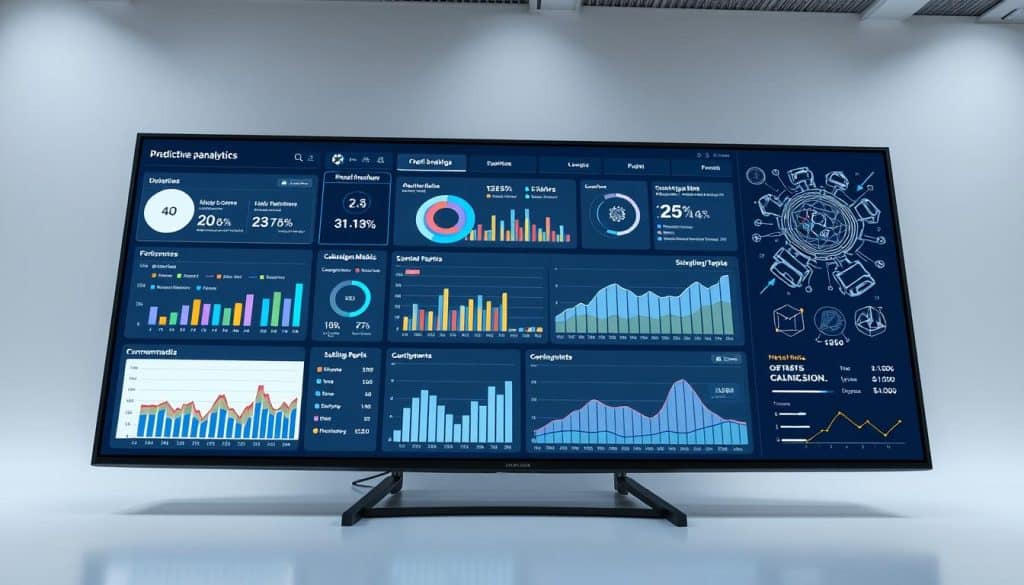
By 2025, predictive analytics will go beyond simple history analysis. It will forecast customer actions before they happen. These systems will analyze thousands of data points to spot patterns humans miss.
Canadian financial service ATB Financial is already using AI to predict customer interest in products. Their predictive models have boosted campaign success by 40% and cut down on customer acquisition costs.
“The future of marketing isn’t just about responding to customer needs—it’s about anticipating them. Predictive analytics gives us the ability to be there for customers exactly when they need us, sometimes before they even realize it themselves.”
– Sarah Chen, Chief Marketing Officer at ATB Financial
These systems will use external data like economic trends and weather to make more accurate predictions. For Canadian businesses in seasonal markets, this will be very useful for planning inventory and promotions.
Automated Content Creation and Optimization
Content creation has always been a human-heavy task in marketing. But by 2025, AI will change this with advanced natural language generation. These systems will create personalized content at scale, from email subject lines to product descriptions.
Vancouver-based Hootsuite is already using AI to optimize social media content. Their system analyzes engagement patterns to suggest the best posting times and content formats for different audiences.
The next step will see AI not just suggest content strategies but actually create original content tailored to specific audience segments. This will let even small marketing teams keep consistent communication across many customer segments.
Hyper-Personalization and Customer Data Platforms
Generic marketing messages are becoming less effective as consumer expectations rise. By 2025, hyper-personalization will be the norm, with messages tailored to individual customers based on their unique preferences and behaviors.
This level of personalization needs advanced customer data platforms that can combine data from various sources and act on it in real-time. Canadian retailers like Lululemon are leading the way, creating unified customer profiles that include in-store purchases, online browsing, and mobile app usage.
Real-Time Personalization Engines
Hyper-personalization tools will evolve to create truly individualized experiences across all touchpoints. These engines will analyze behavioral signals in milliseconds to deliver the most relevant content and offers.
Toronto-based Loblaw Digital has started using this technology in their PC Optimum program. Their next system will use AI to adjust messaging based on location, weather, and time of day for even more personalization.
The most advanced systems will even adjust messaging based on emotional cues detected through interaction patterns. This will create communications that respond to customer moods and preferences in the moment.
Unified Customer Profiles and Journey Mapping
By 2025, fragmented customer data will be a thing of the past. Advanced customer data platforms will create detailed profiles that track every interaction across all channels. These unified profiles will enable seamless experiences, no matter how customers choose to interact with brands.
Montreal-based Frank And Oak has pioneered this approach in Canadian retail. Their system recognizes customers across their website, mobile app, and physical stores. This unified view allows them to offer consistent styling recommendations and personalized promotions across all channels.
The next step will be predictive journey mapping that anticipates customer needs at each stage of their relationship with a brand. These systems will automatically trigger the most appropriate next action based on where customers are in their journey.
No-Code Automation and Omnichannel Integration
The complexity of marketing tech has traditionally required specialized skills. But by 2025, no-code automation platforms will make these capabilities accessible to all. Marketers without technical backgrounds will be able to build sophisticated workflows through easy-to-use interfaces.
This democratization will speed up innovation by putting powerful tools in the hands of marketing pros who know customer needs but lack tech skills. Canadian businesses of all sizes will benefit from faster marketing automation implementation.
Democratized Marketing Technology
The future of marketing automation will be all about accessibility. Visual workflow builders, AI-assisted setup, and pre-built templates will let marketers implement complex automation without coding. Edmonton-based Jobber is already using this approach with their marketing automation platform.
Small and medium-sized businesses in Canada will find this democratization very important. They often lack dedicated tech resources but need advanced marketing capabilities to compete.
Seamless Cross-Channel Customer Experiences
Omnichannel integration will become essential by 2025. Advanced automation platforms will ensure consistent messaging and experiences across all channels. Ottawa-based Shopify has pioneered this approach with their unified commerce platform.
Shopify’s next-generation system will use AI to optimize messaging for each channel while keeping brand consistency. This will dramatically improve conversion rates for high-value enterprise accounts.
Conclusion: Preparing Your Business for the Automated Marketing Future
As we look towards 2025, Canadian businesses need to get ready for new future trends in marketing automation. The technologies we’ve talked about are real tools that will help businesses stay ahead. They are key to winning in the future.
First, check how your current marketing tech stacks up. If you’re starting out, build a strong base with customer data platforms. Then, move on to more advanced tools. For those already using tech, focus on adding AI to boost marketing efficiency and smart decision-making.
It’s also important to train your marketing team. They should learn about data-driven marketing, how to read analytics, and basic automation. Create teams that mix marketing smarts with tech know-how to fill gaps.
Plan your tech roadmap with projects that offer quick wins and long-term benefits. Look at the ROI in terms of time saved, better conversions, and more customer value. These are key to winning over your leadership team.
The best companies will see AI in marketing automation as a major business shift. They’ll link automation to improving customer experiences and company values. This approach will help them stay ahead in a tough market.
By adopting these changes now, Canadian businesses can build stronger customer ties, improve operations, and adopt future marketing strategies. This will lead to lasting growth in a competitive world.